

Staking tomatoes is important for promoting optimal growth in your plants and keeping them healthy. And its easy to do, so let’s get into it!
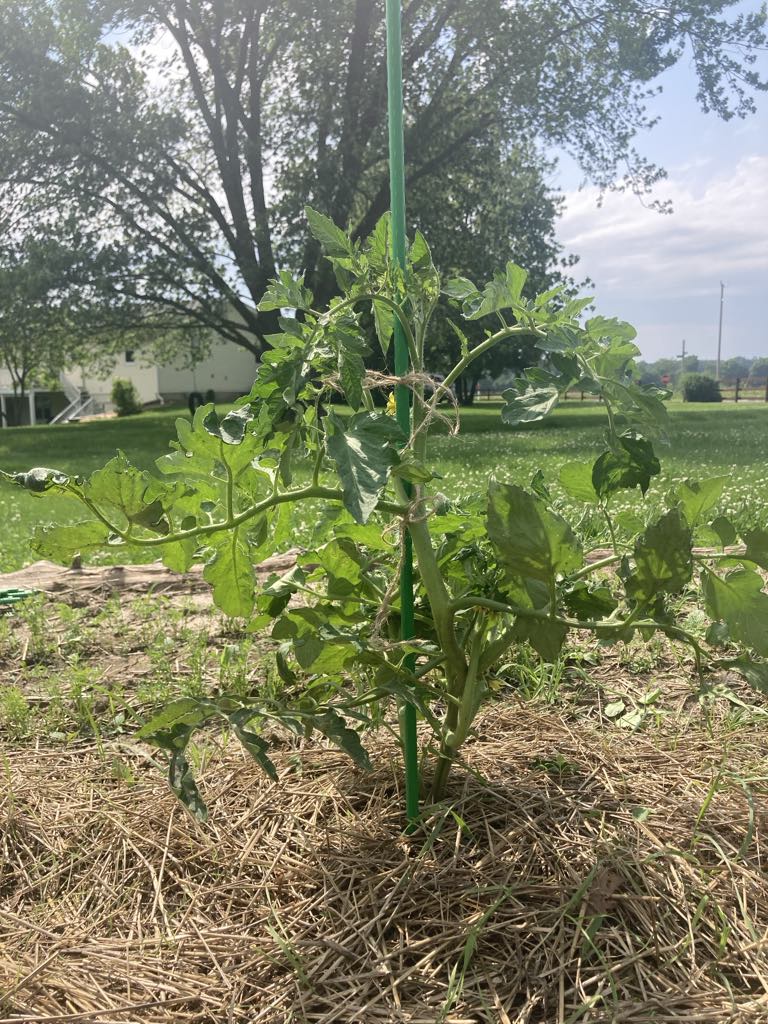
Why do you need to stake tomatoes
- Prevents disease – Tomatoe plants are very susceptible to blight and mold which is often caused by the leaves of the plant being exposed to pathogens and bacteria from the dirt.
- “Blight” is a general term used to describe a rapid and extensive browning, wilting, or death of plant tissues, especially leaves, stems, or flowers.
- Improves air circulation – Good airflow reduces humidity around the plant, which again helps prevent rot and disease.
- Improves sun exposure – More even sunlight exposure will help keep the plant healthy and also improve fruit ripening.
- Supports weight of fruit – Prevents the branches from breaking from the weight of the fruit and once the fruit has come on, it prevents it from sitting in the dirt.
- Easier harvesting – Its easier to remove fruit from the vine without damaging the plant itself when fruit is a little exposed and easy to grab.
What are some different methods for staking tomatoes?
- Single Stakes: A wooden or metal stake tied to the main stem — best for determinate tomatoes.
- Tomato Cages: Wire cages that support the plant from all sides — easy to use and great for beginners.
- Trellises or String Systems: Often used for indeterminate (vining) varieties; great for maximizing vertical space.
- Cattle panels: A cattle panel on each side of the row of tomatoe plants holds the plant and fruit up.
What items do you need to stake tomatoes if using a simple stake method?
Staking tomatoes is as easy as it sounds no matter what method you choose.
1. Stakes
- Type: Wood, bamboo, plastic, or metal
- Size: About 4 to 7 feet tall, depending on tomato variety (taller for indeterminate types)
2. Ties or Twine
- Material: Soft garden twine, cloth strips, Velcro plant ties, or tomato clips
- Purpose: Gently secure the main tomato plant to the stake without damaging the stem
3. Hammer or Mallet
- To drive stakes into the ground firmly, especially wooden or metal ones
4. Pruners or Garden Scissors
- To prune lower leaves or suckers and make tying easier
5. Mulch
- To keep the ground moist and dirt off of the leaves. It will also help control weeds.
How do you stake tomaotes with a simple stake?
Staking Determinate Tomatoes
These are bush-type plants that stop growing once fruit sets. They usually don’t need as much height or pruning.
Recommended Setup:
- Stakes: 3–5 feet tall
- Support: Tie the plant in 1–2 spots, just enough to prevent it from falling over
- Pruning: Minimal—remove bottom leaves or any diseased foliage, but let the plant grow naturally
Good materials:
- Wood or bamboo stakes
- Soft cloth ties or twine
Staking Indeterminate Tomatoes
These vine-type plants grow all season and need strong, tall support.
Recommended Setup:
- Stakes: 6–7 feet tall
- Support: Tie the main stem every 8–12 inches as it grows
- Pruning: Remove suckers (side shoots between the main stem and leaves) to direct energy to fruit production
Good materials:
- Metal or hardwood stakes (sturdier)
- Velcro ties, garden twine, or tomato clips
- Optional backup: string trellis or Florida weave (for multiple rows)
Pro Tips:
- Install stakes while plants are young to avoid root damage and train tomatoe where to go early.
- Use soft, stretchy ties to avoid cutting into stems.
- Keep the area well mulched to control moisture and weeds.
- Regularly check for signs of stress or wind damage.
Don’t miss out on an abundant, healthy harvest of juicy, flavorful tomatoes by skipping this task. Stake your tomatoes and watch them grow this summer!


