

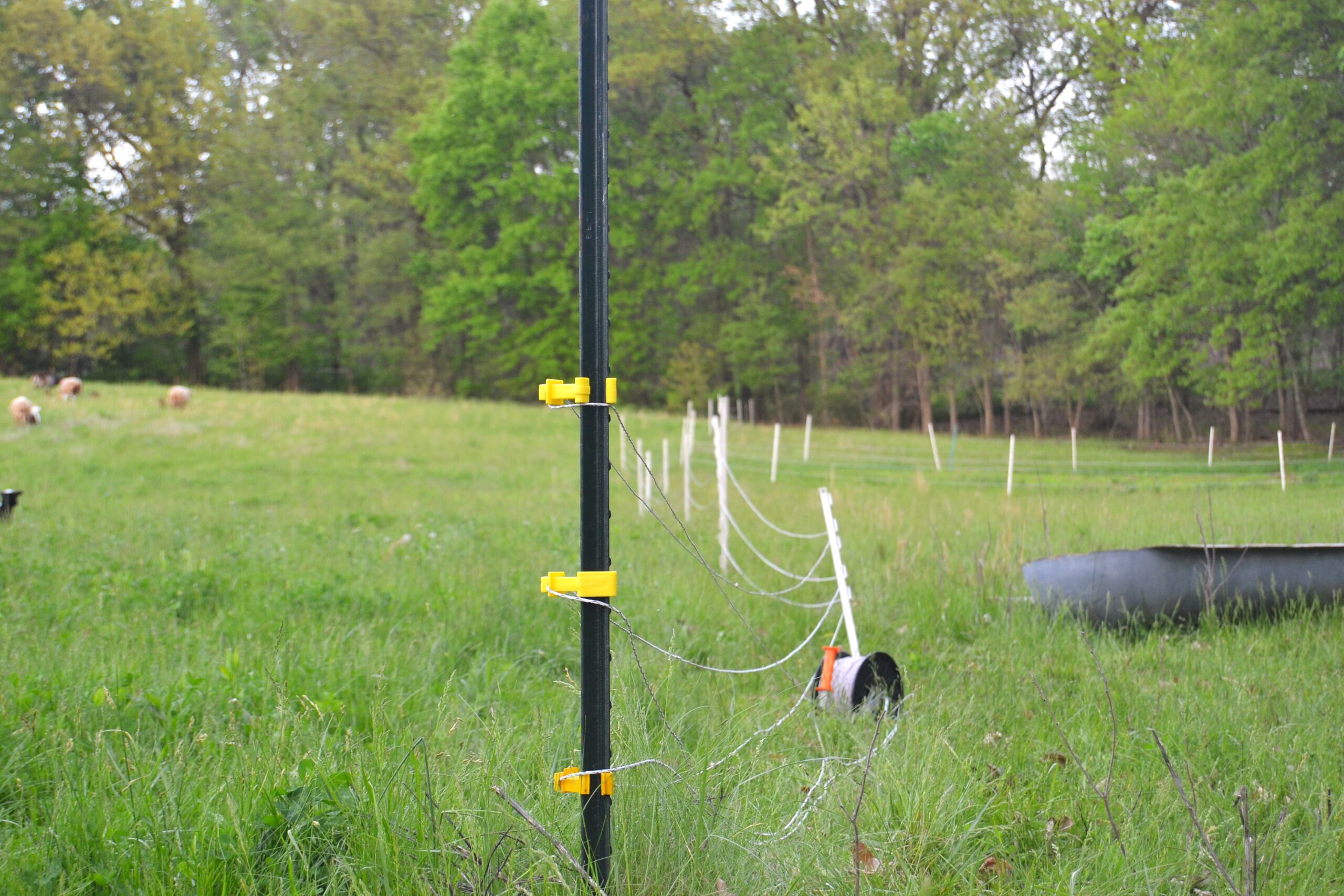
Rotational grazing is a livestock management method where animals are kept on a relatively small area of pasture for a short period of time and then rotated to a new area. This system is also known as intensive grazing or mob grazing.
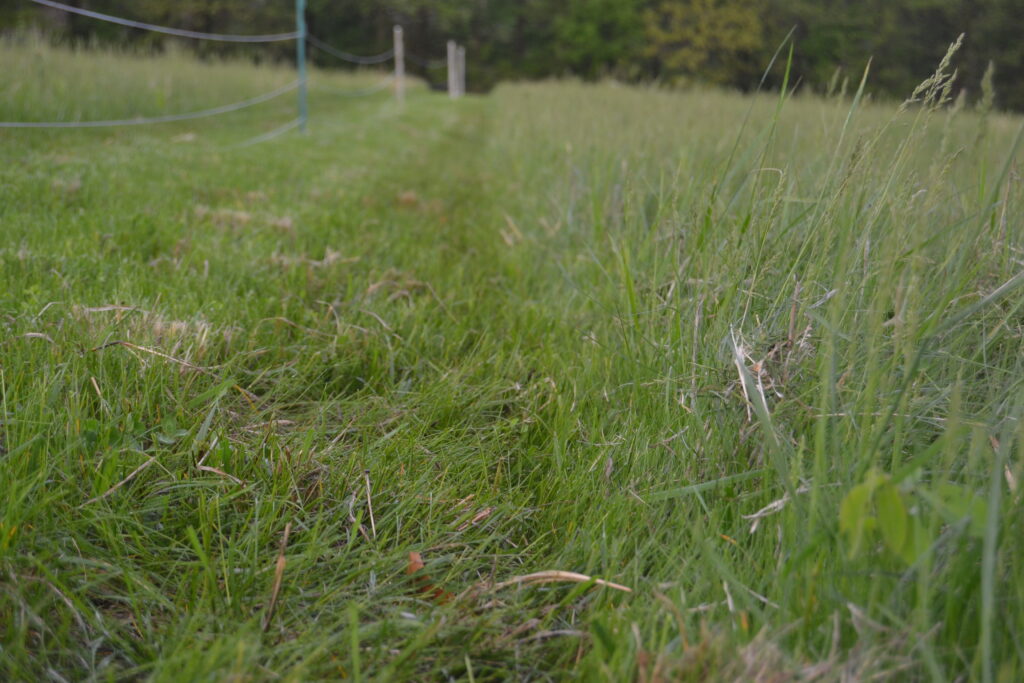
Before I get into why we chose this method for our sheep, let me tell you about what rotational grazing is.
Key Characteristics:
Rotational grazing can look a little different farm to farm, but it will all share the following characteristics.
-
- High stocking density: A large number of animals graze a small area for a brief time.
- Frequent rotation: Animals are regularly moved to fresh pasture to prevent overgrazing.
- Grazing period: Livestock are moved through each paddock in a planned sequence, grazing one area at a time.
- Resting Period: After grazing, each paddock is left to rest and regenerate. The rest period duration can vary based on factors like forage growth rate and seasonal conditions.
- Improved pasture health: Short grazing periods followed by rest allow plants to recover and regrow well.
- Greater labor and management input: Requires planning and infrastructure, such as fencing and water systems.
Benefits:
-
- Improved Pasture Health: Plants have time to regrow, leading to stronger root systems and more resilient forage.
- Better Soil Quality: Rotational grazing reduces erosion, improves soil structure, and enhances organic matter.
- Increased Forage Production: More productive pastures mean potentially lower feed costs.
- Manure Distribution: Livestock naturally fertilize different parts of the pasture evenly.
- Animal Health: Reduces parasite load and provides more nutritious forage.
Drawbacks:
-
- Initial Setup Costs: Fencing, water systems, and planning take time and money.
- Management Intensity: Requires close monitoring of forage growth and animal needs.
- Knowledge and Flexibility: Success depends on adapting to changing pasture conditions and weather.
Illustration:

Why we use rotational grazing:
When we moved to this 10 acres, our field, although full of beautiful Daisies and Black-eyed Susans in the summer, was thin, weedy and visibly depleted of nutrients from having had hay taken off of it every year and no nutrients being put back into it. It was very degraded and we wanted to see it lush and vibrant with the ability to support as much livestock as we could.
Sheep were the most obvious choice of livestock for us to invest in to replenish the land. Their size and our ability to manage them were appealing to us.
If done right, we knew through rotational grazing, our sheep would do the hard work of mowing, disturbing the soil and distributing manure to create an ideal environment for regenerative growth. This meaning, year after year, we can expect to have thicker, more productive pastures that will be able to sustain more livestock.
It has been really rewarding and fun to see this process work! In future posts, I will share how we do it on our 7 acre pasture and the supplies we use.


